
48th AMS Program (2026)
48th AEROSPACE MECHANISMS SYMPOSIUM
May 13 – 15, 2026
Hosted by NASA Marshall Space Flight and Lockheed Martin Space.
Organized by the Mechanisms Education Association.
SYMPOSIUM OBJECTIVES
This symposium is concerned with the problems of design, fabrication, test, and operational use of aerospace mechanisms. Emphasis is on hardware developments. The symposium provides a social and technical forum for personnel active in the field of mechanisms technology, as well as providing a source of information for others interested in this field. The symposium rotates among eight NASA Centers and attracts papers and attendees from all over the world.
SYMPOSIUM LOCATION
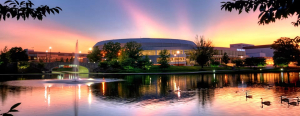 The Von Braun Center, Huntsville, Alabama is the site for all technical sessions. Check in and technical sessions will be held in Ballrooms 1 and 2, and lunches and the Wednesday evening reception will be held in Ballrom 4.
The Von Braun Center
700 Monroe Street, Huntsville, Alabama 35801, USA
SYMPOSIUM ACTIVITIES
The planned technical and social activities provide an opportunity for attendees to become professionally and personally acquainted. Dress attire is business casual unless otherwise noted.
MECHANISMS COURSES
On Monday and Tuesday, May 11 and May 12, 2026 three separate courses will be offered at the convention center. Registration for the Aerospace Mechanisms Symposium is not included in any class price and registration for the AMS symposium does not include registration for any of the courses.
Space Mechanisms Course (May 11-12)
Launchspace is providing a special edition of its Space Vehicle Mechanisms course. This course explores the technologies required for successful space mechanisms design and offers a detailed look at many of the key components common to most mechanisms. The materials necessary to achieve high performance are discussed. Examples of the many types of mechanisms are included for illustration. In addition, the mechanisms relationships and interfaces with other vehicle systems are explored. The course includes design and analysis examples to demonstrate principles involved in understanding how mechanisms should work and how design margins should be evaluated during the evolution of a program.
Register at: Space Vehicle Mechanisms
The price for this course is $895 (until April 1).
Compliant Mechanisms Design (May 11-12)
Traditional rigid-body mechanisms consist of rigid links connected at movable joints. A compliant mechanism is a mechanism that gains at least some of its mobility from the deflection of flexible members rather than from movable joints only. This two-day course focuses on the basics of compliant mechanisms, modeling and simulation, materials selection, failure prevention and design.
Register at: Compliant Mechanisms
The price for this course is $895 (until April 1).
Rolling-Element Bearings: Fundamentals and Mechanics (May 11-12)
Examine fundamental geometry, kinematics, Hertzian contact mechanics, internal load distributions, preloading, stiffness and various nonlinear relationships of rolling-element bearings. Explore how system performance characteristics are affected by both internal bearing parameters and various bearing row configurations. Learn about boundary influences, such as fit-ups and relative thermal expansions, and gain knowledge related to the design, sizing, analysis and troubleshooting of rolling-element bearings. A minimum of 10 attendees is required to hold the course. Lunch and refreshments provided.
Register at: www.halpinengineeringllc.com
The price for this course is $1250.
Check-In
On Tuesday evening, May 12, from 6:00-8:00 PM, check in and registration will be in The Von Braun Center, 700 Monroe Street, Huntsville. Symposium materials will be available along with light refreshments.
Reception
On Wednesday evening, May 13, a reception will be held in The Von Braun Center. Supplier displays and poster papers will be exhibited during the evening along with demonstrations by a local school robotics team. A buffet dinner will be served. The reception is open for the enjoyment of all attendees and guests.
The following companies will be exhibiting during the reception:
| Company Name | Address | Product Range | Link |
|---|---|---|---|
| American Motion Systems | Morgan Hill, CA | Motors | American Motion Systems |
| ARQUIMEA | Madrid, Spain | Mechanisms and actuators | ARQUIMEA |
| BEI Precision | Maumelle, AK | Optical Encoders | BEI Precision |
| Castrol | Wayne, NJ | Space lubricants | Castrol |
| CDA Intercorp | Deerfield Beach, FL | Actuators/Motors | CDA Intercorp |
| Cerobear | Germany | Ceramic Bearings | Cerobear |
| Diamond Antenna & Microwave | Littleton, MA | Rotary Joints | Diamond Antenna & Microwave |
| Eaton ITD | Cleveland, OH | Connectors | Eaton ITD |
| Ensign-Bickford | Simsbury, CT | Release Mechanisms | Ensign-Bickford |
| ESI Motion | Simi Valley, CA | Actuators/Motor Control | ESI Motion |
| Fuchs Lubricants | Harvey, IL | Space lubricants | Fuchs Lubricants |
| Gurley Precision Instruments | Troy, NY | Encoders, Optics, Instrumentation | Gurley Precision Instruments |
| Harmonic Drive LLC | Beverly, MA | Actuators | Harmonic Drive LLC |
| HQW Aerospace | Plymouth, UK | Bearings | HQW Aerospace |
| Motiv Space Systems | Pasadena, CA | Robotics | Motiv Space Systems |
| Motor Magnetics, Inc | St. Petersberg, FL | Encoders, Sensors, Motors | Motor Magnetics, Inc |
| Sensitron | Hauppauge, NY | Motor controller and power | Sensitron |
| Sensory System, LLC | St. Petersberg, FL | Encoders, Sensors, Motors | Sensory System, LLC |
| Sierra Space | Louisville, CO | Spacecraft Systems | Sierra Space |
| Windings | New Ulm, MN | Motors | Windings |
Symposium Banquet
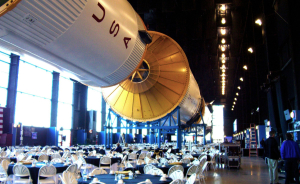
Saturn V Launcher, Space & rocket Centre ©turnerconstruction.com
On Thursday evening, May 14, the symposium dinner open to all attendees and guests will be in the Space & Rocket Center. The center is home to a Saturn V launch vehicle from the Apollo era. The Symposium Banquet will be served underneath the Saturn V lanch vehicle. Busses will be provided to take delgates and the guests to and from the Space & rocket Center.
Facility Tours
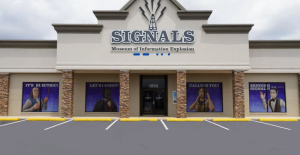
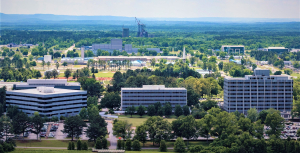 On Friday afternoon, May 15, there will be an opportunity to tour NASA Marshall Space Flight Center or The Signals Museum – www.signals-museum.org. Transportation will be provided with symposium registration.
The NASA Marshall Space Flight Center tour is a private tour open to only U.S. citizens and will be limited to 60 persons; the MSFC tour will close on April 29 irrespective of the number of people indicating they wish to join the tour to allow for additional security checks to be completed.
The tour of the Signals Museum is open to all symposium attendees and guests.
Guest Activities
Huntsville, Alabama, in northern Alabama, is the state’s largest city, nicknamed “Rocket City” for its leadership in U.S. space and defense programs, hosting NASA’s Marshall Space Flight Center and Redstone Arsenal. It’s a growing tech hub with Cummings Research Park, diverse attractions like the U.S. Space & Rocket Center and Botanical Garden, and a rich history that briefly made it Alabama’s first capital.
Apart from the space related attractions Huntsville, Alabama, offers other attractions such as Huntsville Botanical Garden and Monte Sano State Park for nature lovers, plus Lowe Mill Arts & Entertainment and Downtown for culture and dining; nearby options include Cathedral Caverns State Park, Cook Museum of Natural Science, and scenic drives around Lake Guntersville.
Presenters’ Meetings
Presenting authors are required to attend a complimentary breakfast on the day of their presentation. (Note – only the presenters, not all authors of the paper.) This gathering gives the session participants an opportunity to meet their Session Chair and each other, and to review the session arrangements. The Symposium AV help will be available to discuss presentation requirements.
SYMPOSIUM INFORMATION
Registration
Advance registration is requested to facilitate planning and commitments. Please register on www.aeromechanisms.com. The registration fee is $775 ($350 for full time educators, $300 for students, $250 for retirees). Registrants will obtain access to the proceedings as soon as they are available. NOTE: If the registration payment is received after 11:59pm CST (GMT-6) April 1, 2026, the registration fee is $875. Also, any registrations started but unpaid before this deadline will also be revised to the full late registration fee of $875. This fee covers all sessions, transportation as noted, reception and banquet and early access to the proceedings.
Refund Policy
If a registration is cancelled the Mechanisms Education Association will refund all fees paid less $50 if cancelled before April 22, 2026. After April 22, no refunds will be given. Alternatively, a registration may be transferred to another employee at the same company if the original registrant cannot attend and if the request for the transfer is done prior to the start of the symposium by contacting our registration point of contact (Ron Mancini, MEA Treasurer). Any booking on the tour of NASA Marshall Space Center associated with the original booking will be voided irrespective of whether the new delegate is a US citizen or not – please refer to the FAQs page.
Hotels
There is no official symposium hotel; there are numerous hotel choices in Huntsville close to The Von Braun Center. Delegates are reminded that they are responsible for their own accommodation and travel costs – please refer to the FAQs page.
Dr. George Herzl Award
At each symposium, an award is given to the author(s) of the “Best Paper.” The award is based on paper content, presentation delivery, and visual aids. This award was established in honor of Dr. George Herzl of Lockheed Martin, a co-founder of the Aerospace Mechanisms Symposium.
Dr. Charles Coale Grant
Each year the Mechanisms Education Association sponsors high school and junior high school robotics teams in honor of Dr. Charles Coale of Lockheed Martin. Dr. Coale was the leader of the symposium for more than 20 years and had a special interest in helping children.
SYMPOSIUM PROGRAM AND TIMETABLE
| Time (CST) | Paper Title | Session Chair / Presenting Author | Affiliation | File Download |
|---|---|---|---|---|
| Tuesday May 12, 2026 | ||||
| 18h00 - 20h00 | CHECK-IN AND REFRESHMENTS - South Hall Main Entrance | |||
| DAY-1: Wednesday May 13, 2026 All Sessions are in Ballrooms 1 & 2 | ||||
| 07h00 | Presenters' Breakfast, Meeting Room 1 | |||
| 08h00 | CHECK-IN - South Hall Main Entrance | |||
| 08h10 | INTRODUCTORY REMARKS | Jonathan Wood, General Chair | Lockheed Martin Space, Sunnyvale, CA | |
| David E. Eddleman, Host Chair | NASA Marshall Space Flight Center, Huntsville, AL | |||
| Lisa Bates, Director of Engineering | NASA Marshall Space Flight Center, Huntsville, AL | |||
| Session I: DEPLOYABLES | Ben Nickless | NASA Langley Research Center | Top Of Page | |
| 08h30 | Deployable Nose Landing Gear for Reusable Orbital Re-Entry Vehicle | Biju Prasad | Indian Space Research Organisation | prasad.pdf |
| 09h00 | Design and Spaceflight Qualification of the Large Area Membrane Deployable Antenna | Trey Quiller | MMA Space | quiller.pdf |
| 09h30 | Lessons Learned from In-Orbit Deployment Dynamics of a Large Solar Array | Amit Kamboj | U R Rao Satellite Centre | kamboj.pdf |
| 10h00 | A Tensioning and Deployment Mechanism for Thin Membrane Inflatable Lenticular Reflectors in Space | Aman Chandra | Steward Observatory, University of Arizona | chandra.pdf |
| 10h30 | 30 min Break | |||
| 11h00 | Development and Qualification of Deployment Mechanisms for Synthetic Aperture Radar Antennas Onboard Small Satellites | Carlos Ramos Gutiérrez | Arquimea | gutierrez.pdf |
| 11h30 | Deployable Contamination Cover for the IDEX Dust Mass Spectrometer | Chip Bollendonk | Laboratory for Atmospheric and Space Physics (LASP) | bollendonk.pdf |
| 12h00 | Lunch: Lunch for AMS Attendees | |||
| Session II: LAUNCH VEHICLES | Lionel Gaillard | ESA/ESTEC | Top Of Page | |
| 13h00 | Emergency Egress Release and Braking System Testing Lessons Learned | Nicholas Barlow | RS&H | barlow.pdf |
| 13h30 | Compliant One-Way Valve for Payload Fairing Venting | Johann Waesle | Beyond Gravity Switzerland | weasle.pdf |
| 14h00 | 15 min Break | |||
| Session III: RELEASE MECHANISMS | Claef Hakun | NASA Goddard Space Flight Center | Top Of Page | |
| 14h15 | An Analytical Approach to Predicting Separation Kinematics of Linear Shaped Charge Stage Separation System | Grady Lynch | Lockheed Martin Space | lynch.pdf |
| 14h45 | Resolution of the CODEX Aperture Door Anomaly | Jason Budinoff | Visioneering Space Corp | budinoff.pdf |
| 15h15 | Performance Issues, Run-In Testing, and Lessons Learned with EBAD Pin Pullers | Charles Fisher | Laboratory for Atmospheric and Space Physics | fisher.pdf |
| 15h45 | 30 min Break | |||
| SESSION IV: POSTER SESSION PREVIEW | Mark Balzer | NASA Jet Propulsion Laboratory | Top Of Page | |
| A rapid fire session of poster papers. Each presenter will give their best 5-minute pitch and attendees can follow up at the reception or other time. | ||||
| 16h15 | Additive Manufacturing of Flywheel Mass for Reaction Wheels | Dimitri Albert | Rockwell Collins Deutschland GmbH | kohnen.pdf |
| 16h20 | Development of a Compact, Planar, Spring Finger Latching Hinge for Small Satellites | Logan Althoff | Lockheed Martin Space | althoff.pdf |
| 16h25 | Development and Qualification of Harmonic Drive® Gears with Customer Specific Ratios for Aerospace Applications: Design Challenges and Performance Assessment | Inigo Ruiz de Velasco Nebot | Harmonic Drive SE | nebot.pdf |
| 16h30 | Design and Testing of an Origami-based Deployable Telescope System | Philip Klocke | Brigham Young University | klocke.pdf |
| 16h35 | Detection of Axis‑of‑Rotation Variations in Spaceflight Mechanisms Using Encoder Alignment Data | John Beasley | Quantic BEI | beasley.pdf |
| 16h40 | Development of a Unit-Level Vibration Qualification Test for Small Satellite Solar Array Drive Mechanisms | Jeremy Hawke | UTIAS Space Flight Laboratory | hawke.pdf |
| 16h45 | Design and Testing of a Thruster Pointing Mechanism (TPM-250) for Deep Space and IOS Nanosats | Freddie Williams | AVS UK | fouto.pdf |
| 16h50 | Lessons Learned from Designing and Qualifying a Zero-Lever-Arm Deployable Siderostat with a Release Nut HDRM | Guillem Quintana Buil | Dcubed | buil.pdf |
| 16h55 | Development of a Novel Bistable Kresling Origami Telescope Baffle | Brennan Chung | Sandia National Labs | chung.pdf |
| 17h00 - 22h00 | RECEPTION - Ballroom 4 | Component suppliers display current products and provide tutorials, Poster Papers are displayed, Robotics Team demonstrations, and a buffet meal. | ||
| DAY-2: Thursday May 14, 2026 | ||||
| 07h30 | Presenters' Breakfast, Meeting Room 1 | |||
| Session V: DOCKING | Terry Nienaber | NASA Langley Research Center | Top Of Page | |
| 08h30 | Design and Development of a Novel Deployable Lever Based Rigidization Mechanism with Self Hold Down Feature for Space Docking Experiment (SPADEX) | Abhishek Kumar | U R Rao Satellite Centre | kapoor.pdf |
| 09h00 | Design, Development, and Test of the Advanced Apollo Orbital Assembly System | Marc Jarmulowicz | Dynamic Concepts LLC, an Astrion subsidiary | jarmulowicz.pdf |
| 09h30 | The NASA Docking System- Block 2: Changes and Challenges for Lunar exploration | Karl Keiser | Onyx Aerospace | keiser.pdf |
| 10h00 | 30 min Break | |||
| Session VI: THE STU LOEWENTHAL TRIBOLOGY SESSION | Lance Lininger | Lockheed Martin Space, Sunnyvale, CA | Top Of Page | |
| 10h30 | Radiation-Conditioned Ti–hBN Coatings for Space Mechanisms: Bridging Tribology and Irradiation Effects from Laboratory to Low-Earth Orbit | Abhijith Sukumaran | Florida International University | sukumaran.pdf |
| 11h00 | PFAS-Free Ionic Liquid Lubricants for Space Mechanisms | Román de la Presilla | KTH Royal Institute of Technology | de_la_presilla.pdf |
| 11h30 | Development of a Micro-Torque Measurement System for Characterizing Novel Materials in Miniature Space Bearings | Juan Bosch | Akron Engineering Tribology Laboratory | bosch.pdf |
| 12h00 | Lunch: Lunch for AMS Attendees | |||
| Session VII: INSTRUMENTS | Louise Jandura | NASA Jet Propulsion Laboratory | Top Of Page | |
| 13h00 | RSI100-220/60 Qualification Status | Ben Kohnen | Rockwell Collins Deutschland GmbH | kohnen2.pdf |
| 13h30 | Development of the DrACO Sample Delivery Carousel | David Yu | Honeybee Robotics, a Blue Origin Company | yu.pdf |
| 14h00 | Development of the MMX P-SMP Sample Return Hold and Release Mechanism | Sherman Lam | Honeybee Robotics, a Blue Origin Company | lam.pdf |
| 14h30 | 30 min Break | |||
| Session VIII: ACTUATORS & GIMBALS | Tom Rogers | Vibrac LLC | Top Of Page | |
| 15h00 | Development of 3-Axes Advanced Electrical Propulsion Pointing Mechanisms (APPMAX3) | Paul Janu | Beyond Gravity Austria | janu.pdf |
| 15h30 | Design and Test of the VIPER Mobility Actuators | Alexander Sobey | NASA Johnson Space Center | sobey.pdf |
| 16h00 | Development and Testing of a Low LoS Disturbance Antenna Gimbal Subsystem: Investigation and Lessons Learned | Andy Keegan | Sierra Space | keegan.pdf |
| 16h30 | SPECIAL PRESENTATION – Returning Humans to the Moon: HLS Program Overview | Kent Chojnacki, HLS Deputy Program Manager | Marshall Space Flight Center | |
| 18h00 - 22h30 | BANQUET - Space & Rocket Center | Dinner and entertainment under a Saturn V launch vehicle from the Apollo era. | ||
| DAY-3: Friday May 15, 2026 | ||||
| 07h30 | Presenters' Breakfast, Meeting Room 1 | |||
| Session IX: SPACE EXPLORATION | Nicolas Haddad | NASA Jet Propulsion Laboratory | Top Of Page | |
| 08h30 | Orientation Mechanism for the Mars Sample Return Mission Capture and Containment Return System | Walter Smith | NASA Goddard Space Flight Centre | smith.pdf |
| 09h00 | Development and Qualification Testing of the “Beresheet” Lunar Lander Landing Gear | Nadav Zimron-Politi | Israel Aerospace Industries | zimron-politi.pdf |
| 09h30 | ExoMars Landing Leg Mechanism Development and Qualification | Kevin Picton and Aiala Artiagoitia Carlos | Sener | picton.pdf |
| 10h00 | LISTER Coiled Tubing Deployable Boom and Lunar Pneumatic Drill – Development Challenges and Flight Performance | Peter Ngo | Honeybee Robotics | ngo.pdf |
| 10h30 | 30 min Break | |||
| 11h00 | Sample Retrieval Lander VECTOR – Vertically Ejected, Controlled Tip-Off Release | Alex Bielawiec | NASA JPL | bielawiec.pdf |
| 11h30 | The Return to the Moon: Highlights of the Artemis II mission from an SLS Perspective | John Blevins, SLS Chief Engineer | Marshall Space Flight Center | |
| 12h00 | TECHNICAL SESSIONS CONCLUSION | Jonathan Wood | Lockheed Martin Space, Sunnyvale, CA | |
| Herzl Award Presentation | ||||
| 12h30 | Lunch: Lunch for AMS Attendees | |||
| TOURS | ||||
| 13h30 | Busses depart Convention Center for symposium tours | |||
| 17h00 | Approximate time busses return to Convention Center | |||
SYMPOSIUM ORGANIZING COMMITTEE
General Chairman: Jonathan Wood, Lockheed Martin Space
Deputy Chairman: Lance Lininger, Lockheed Martin Space
Host Chairs:
- David E. Eddleman, NASA MSFC
- Mathew Zwack, NASA MSFC
Mark A. Balzer, JPL
Torin L. Bowman, NASA ARC
Earl Daley, NASA ARC
Adam G. Dokos, NASA KSC
Michael J. Dube, NASA NESC
Carlton L. Foster, NASA MSFC (retired)
Lionel Gaillard, ESA/ESTeC
Nicolas E. Haddad, JPL
Claef F. Hakun, NASA GSFC
Louise Jandura, JPL
Timothy L. Krantz, NASA GRC
Lance R. Lininger, Lockheed Martin Space
Alan C. Littlefield, NASA KSC (retired)
Stuart H. Loewenthal, Lockheed Martin Space (retired)
Ronald E. Mancini, NASA ARC (retired)
Donald H. McQueen, Jr., NASA MSFC (retired)
Landon Moore, NASA JSC
Benjamin J. Nickless, NASA LaRC
Terry Nienaber, NASA LaRC
Brandan Robertson, NASA JSC
Justin J. Scheidler, NASA GRC
Joseph P. Schepis, NASA GSFC
Jason M. Schuler, NASA KSC
Donald R. Sevilla, JPL (retired)